• Home
  • Delhi or Imperial Style (Slave Dynasty)
    • Quwwat-ul-Islam Mosque
    • Qutub Minar
    • Arhai Din ka Jhompra
    • Tomb of Nasir-ud-Din Mohammad (Sultan Ghari)
    • Tomb of Shams-ud-Din Iltutmish
  • Jaunpur Style
    • Atala Masjid
    • Khalis Mukhlis Masjid
    • Jhangiri Masjid
    • Lal Darwaza Masjid
    • Jami Masjid at Jaunpur
  • Gujarat Style
    • First Period >
      • Jami Masjid at Patan (Adina Masjid)
      • Jami Masjid at Bharuch
      • Jami Masjid at Cambay
    • Second Period >
      • Jami Masjid at Ahmedabad
      • Teen Darwaza
    • Third Period >
      • Bai Hari's Wav
      • Sidi Sayyid Masjid
      • Jami Masjid at Champanir
  • Malwa Style
    • First Phase >
      • Kamal Maula Masjid (Dhar)
      • Lat Masjid (Dhar)
      • Malik Mughis Masjid (Mandu)
    • Second Phase >
      • Jami Masjid at Mandu
      • Ashrafi Mahal
      • Hushang Shah's Tomb
      • Hindola Mahal
      • Jahaaz Mahal
    • Third Phase >
      • Baz Bahadur's Palace
      • Kushk Mahal (Chanderi)
      • Jami Masjid at Chanderi
  • Deccan Styles
    • Gulbarga (1347-1422) >
      • Jami Masjid at Gulbarga
      • Haft Gumbaz
    • Bidar (1422-1512) >
      • Madrassa Of Mahmud Gawan
      • Tomb of Ali Barid
    • Golkonda (1512-1687) >
      • Char Minar
    • Bijapur (16th & 17th Centuries) >
      • Jami Masjid at Bijapur
      • Ibrahim Rauza
      • Gol Gumbaz
      • Mihtar Mahal
    • Khandesh (15th & 16th Centuries) >
      • Jami Masjid at Burhanpur
      • Bibi Ki Masjid
  • Mughal Architecture
    • Humayun's Tomb
    • Delhi Gate at Agra Fort
    • Fatehpur Sikri >
      • Jodh Bai's Palace
      • Birbal's House
      • Diwan-i-Khas
      • Jami Masjid at Fatehpur Sikri >
        • Buland Darwaza
        • Tomb of Salim Chisti
    • Akbar's Tomb
    • Tomb of Itmad-ud-Daula
    • Rang Mahal
    • Diwan-i-Aam at Delhi Fort
    • Landscape Architecture under the Mughals
    • Taj Mahal
    • Safdar Jung's Tomb

Jami Masjid At Gulbarga
Picture
Picture
Picture
Picture

Jami Masjid at Gulbarga

  1. Built in A.D. 1367 under the architect Rafi from Kazwin in northern Persia.
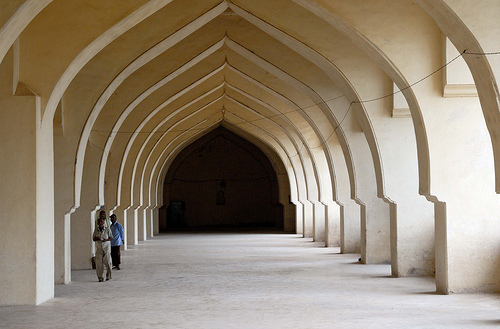
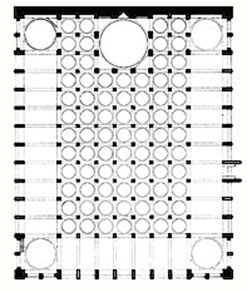
  2. It is a rare example of an Indian mosque without a courtyard as the entire structure is covered with a roof.
  3. The style is neither Persian nor Indian, but both are amalgamated so as both can be unidentifiable.
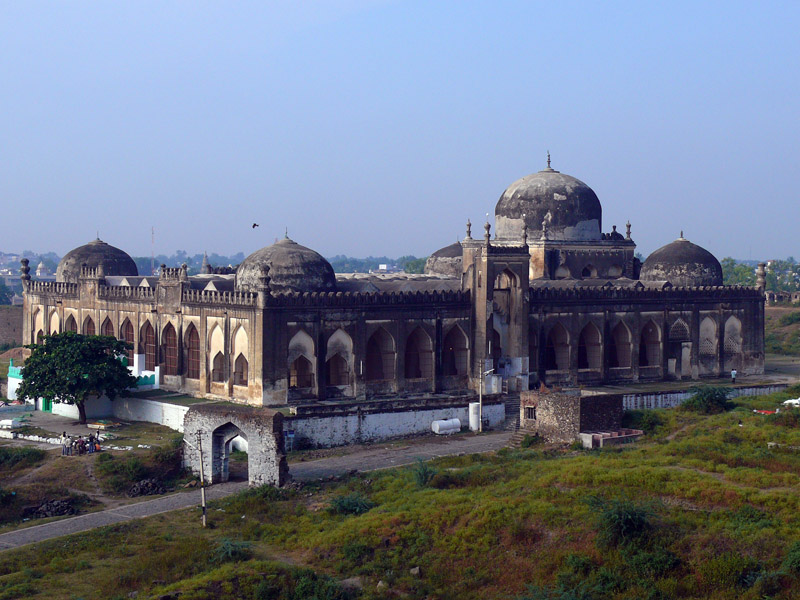
  4. The structure measures 216' X 176', with cloisters on three sides and a spacious sanctuary with a dome on the western side.
  5. The central area is filled in with rows of aisles forming 68 bays, each roofed by a cupola.
  6. The external appearance of the central dome is made lofty and prominent by raising it on a square clerestory, its shape being repeated by the smaller cupolas.
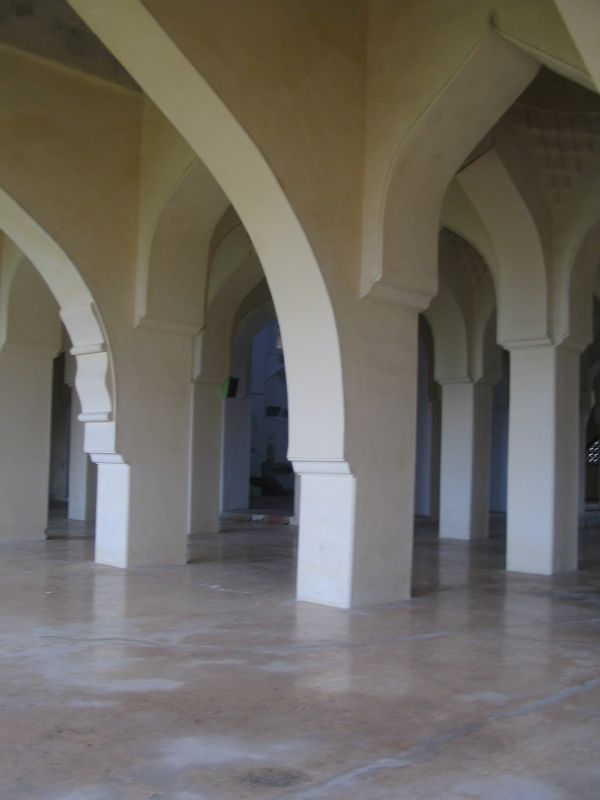
  7. The dome is supported on the clerestory by means of squinches, some of the arches being gracefully foliated.
  8. Other constructional methods such as oversailing courses of masonry and vaulting are used in the aisles. This indicates a ripe technical knowledge and experience of the builders.
  9. The cloisters consist of a series of single archways of a very wide spans and low imposts.
  10. In the middle of the northern cloister is a large archway with the entrance which breaks the symmetry of the design.
  11. The interior is composed of a perspective of square bays with solid piers and vaulted ceilings in both directions.
  12. The building has very little in terms of ornamentation, but is more of an example of intellectual greatness and originality.
  13. The mosque had a great impact on Deccani architecture, its features like the stilted dome raised on the clerestory and the cloister arches with wide spans and low imposts.
  14. The style of this mosque did not find favour in India, though it may have inspired in a limited way the design of the Kali Masjid and Khirki Masjid built in Delhi shortly afterwards.

Powered by Create your own unique website with customizable templates.